
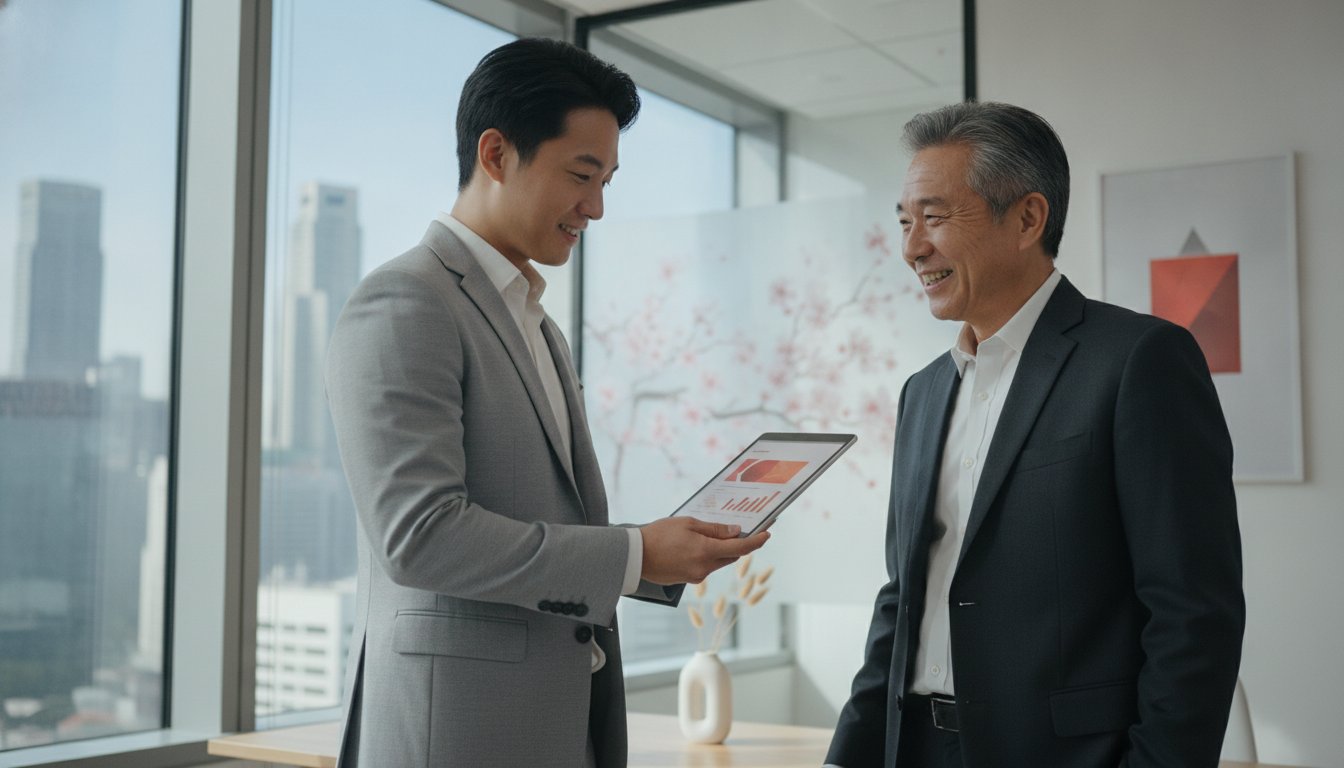
What if your polite “Xièxiè” is actually making you sound like a perpetual outsider in the boardroom? While it’s the first phrase most people learn, over-reliance on a single expression can make your interactions feel transactional rather than personal. If you’ve ever felt a flicker of anxiety about your tone during a high-stakes meeting, you’re not alone. Mastering the nuances of how to say thank you in chinese is a critical skill for any professional looking to build genuine rapport and navigate the cultural weight of gratitude in a Mandarin-speaking environment.
At our training center located at 10 Anson Road, level 22, International Plaza, Singapore 079903, right above Tanjong Pagar MRT, we help adult learners move past basic phrases through a structured conversational chinese course. This 2026 guide will help you transition from a beginner level to a more sophisticated style of communication. You’ll learn how to choose the right expressions for various social and corporate scenarios, ensuring you sound natural and professional. By the end of this article, you’ll have the tools to build better rapport and master the objectives of a business mandarin course with confidence.
Key Takeaways
- Master the technical nuances of the fourth tone to ensure your gratitude sounds natural and avoids common pronunciation pitfalls.
- Learn how to say thank you in chinese across a spectrum of situations, from casual interactions with friends to formal corporate settings.
- Build stronger professional relationships by deploying targeted phrases that demonstrate a deep understanding of Chinese business etiquette and “Guanxi.”
- Navigate cultural nuances by learning how to respond to gratitude correctly, including understanding the role of modesty in Mandarin conversation.
- Identify the benefits of a structured Mandarin course that provides live feedback, helping you move beyond memorized lists toward genuine fluency.
The Foundations of Gratitude: Mastering ‘Xièxiè’ and Its Variations
Mastering how to say thank you in chinese begins with a single word that almost every learner recognizes: “Xièxiè.” While it seems simple, the execution of this phrase is where many professionals falter. At our training center at 10 Anson Road, level 22, International Plaza, our native-speaking instructors frequently observe students falling into the “Shay-Shay” tourist trap. This mispronunciation happens when learners ignore the specific tonal requirements of Mandarin, resulting in a flat, English-inflected sound that lacks professional polish. If you want to build genuine rapport in a Singapore business setting, you must move beyond basic memorization and focus on the mechanics of the language.
Precision in tone is the hallmark of a disciplined learner. In our conversational chinese course, we emphasize that “Xièxiè” is not just a sound; it’s a specific linguistic action. Achieving the right tone ensures your gratitude is received with the respect you intend to convey. This foundational step is essential before you progress to more complex workplace chinese communication strategies.
The Tonal Mechanics of Xièxiè
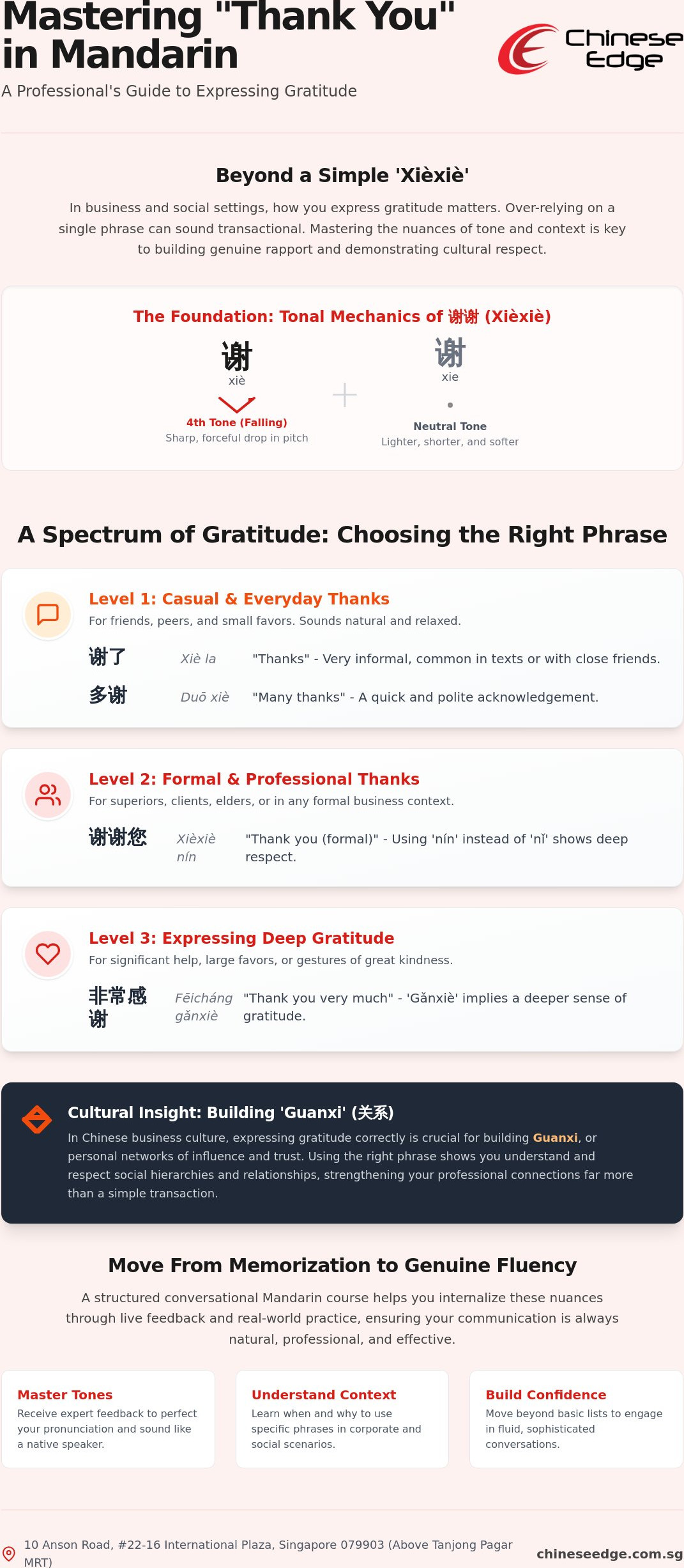
To pronounce “Xièxiè” correctly, you must visualize the fourth tone, also known as the falling tone. Think of it like a sharp drop on a roller coaster. You start at a high pitch and drop your voice quickly and forcefully. The first character carries this strong falling tone, while the second character is a neutral tone. This means the second “xiè” should be shorter, lighter, and lower in pitch. A common mistake is giving both characters equal weight, which sounds unnatural to native speakers. Mastering this contrast is a key objective in any results-oriented mandarin course.
Formalizing Your Thanks: The Power of ‘Nín’
Understanding the nuances of Chinese grammar allows you to adjust your level of formality instantly. While “Xièxiè” works in many casual settings, adding a pronoun can provide more weight to your gratitude. In a professional context, especially when addressing a superior, an elder, or a high-value client at Tanjong Pagar, you should use “Xièxiè nín.”
The word “nín” is the formal version of “nǐ” (you). By making this simple substitution, you signal deep cultural awareness and respect for social hierarchy. This is a non-negotiable skill for professionals who want to excel in a business mandarin course. Using “nín” transforms a standard thank you into a sophisticated gesture of appreciation. It shows that you aren’t just reciting a phrase from a textbook; you’re actively participating in the cultural etiquette of the Chinese-speaking world.
Situational Gratitude: Choosing the Right Phrase for Social Settings
Social settings require a different linguistic toolkit than the structured environment of a boardroom. While we established the tonal foundations of “Xièxiè” in the previous section, your everyday interactions in Singapore often demand a shift in tone to match the level of intimacy or the scale of a favor. Learning how to say thank you in chinese for casual settings allows you to sound less like a textbook and more like a confident communicator. When you move beyond the standard response, you demonstrate a level of cultural fluency that helps bridge the gap between being a learner and a peer.
“Xiè la” is a staple for text messages or quick exchanges with close peers. The addition of the final particle “la” softens the phrase, removing the formality and making the interaction feel more relaxed. For those moments when you need a quick, polite acknowledgement, like someone holding an elevator at International Plaza, “Duō xiè” (Many thanks) is a concise and effective variant. Conversely, if someone has provided significant assistance, you should deploy “Fēicháng gǎnxiè” (Thank you very much). The word “Gǎnxiè” translates more closely to “gratitude” than a simple “thanks,” and adding “fēicháng” (extremely) signals that you recognize the magnitude of the gesture.
Informal and Colloquial Expressions
In the context of workplace friendships, choosing the right level of informality is a subtle art. Using “Xiè la” shows you’ve moved past the acquaintance stage. It’s a verbal signal of trust and comfort. If you want to express surprise alongside your thanks, starting with “Wā” (Wow) creates an immediate emotional connection. It shows the other person that their gesture was unexpected and highly valued. If you find yourself struggling to choose the right words during weekend social gatherings, joining an Adult Conversational Mandarin Course can provide the real-world practice you need to feel natural.
Expressing Appreciation for Specific Acts
Specificity is a powerful tool for building rapport. Instead of a generic response, use “Xièxiè nǐ de bāngzhù” to thank someone specifically for their help. This phrasing is particularly useful when a colleague assists with a task or provides valuable information. In Mandarin culture, acknowledging the specific effort made is often seen as more sincere than a broad statement. It validates the time and energy the other person spent on your behalf.
To further strengthen the bond, you might add “Nǐ tài kě’ài le” (You are too kind). This isn’t just a compliment; it’s a way of deflecting the favor back onto the person’s character, which is a highly regarded social move. Mastering these small additions is what separates a basic learner from someone who truly understands the social dance of the language. Our instructors at Tanjong Pagar MRT focus on these practical applications to ensure you can handle any social scenario with ease.
Business Etiquette: Expressing Appreciation in Professional Mandarin
In the Singapore Central Business District (CBD), workplace chinese communication requires a higher level of precision than casual social banter. While you’ve learned the social nuances, the boardroom demands a more sophisticated approach to how to say thank you in chinese. Gratitude in a corporate context isn’t just about politeness; it’s a strategic tool for building “Guanxi” or long-term professional relationships. For professionals working near our center at International Plaza, mastering these phrases can be the difference between a transactional interaction and a lasting partnership.
If you’re looking to refine your corporate communication, our Business Chinese in Singapore: The 2026 Professional Guide provides a deeper dive into these protocols. Achieving fluency in these specific interactions allows you to project confidence and authority during high-stakes negotiations.
Formal Professional Phrases
When expressing deep appreciation for a significant business opportunity or a long-term partnership, “Wànfēn gǎnxiè” (Ten thousand thanks) carries the appropriate weight. It conveys a level of sincerity that “Xièxiè” simply cannot reach. In digital communication, “Xiè guò” is the standard way to say “thanks in advance.” It’s professional, concise, and widely used in corporate emails to ensure a polite tone while maintaining efficiency.
Addressing a group also requires specific choices. “Xièxiè nǐmen” is a direct way to thank a small team you know well. However, when addressing a larger audience or a formal board meeting, “Xièxiè dàjiā” (Thank you everyone) is more inclusive and respectful. This distinction shows you understand the social hierarchy of the room and respect the collective effort of the group.
Etiquette for Corporate Networking
Networking events and client meetings often hinge on subtle cues. To thank a client for their time, use “Xièxiè nín chōukòng.” This specifically acknowledges that they have “carved out time” from a busy schedule to meet you. It’s a high-level sign of respect that is deeply appreciated in the fast-paced Singapore business environment.
Another powerful phrase is “Mápán nǐ le” (I’ve troubled you). While it translates literally to an apology, it’s used as a very polite form of thanks when someone has gone out of their way to help you. It acknowledges their effort while maintaining your professional standing. This phrase is a hallmark of sophisticated communication and is frequently taught in our specialized business chinese course.
Our training facility at 10 Anson Road, level 22, is designed for busy professionals who need these results-oriented skills. Being located right above Tanjong Pagar MRT makes it convenient to transition from the office to the classroom. Corporate mandarin training is no longer an optional skill; it’s a necessity for those aiming for leadership roles in Singapore’s international landscape.
Beyond the Phrase: Cultural Nuance and Responding to Gratitude
Understanding the proper response to gratitude is just as vital as knowing how to say thank you in chinese. In many Western cultures, a direct “you’re welcome” is the standard. However, in a Mandarin-speaking context, accepting thanks too directly can sometimes feel boastful or overly formal. This is what we call the “Modesty Trap.” Our instructors at 10 Anson Road, level 22, International Plaza, teach students that deflecting a compliment or a thank you is often a sign of high emotional intelligence and cultural awareness. If you want to Speak Mandarin Fluently: Top Tips for Singapore Learners will help you navigate these subtle social waters.
How to Accept Thanks Gracefully
The most common response for beginners is “Búkèqì,” which literally means “don’t be polite” or “no need for ceremony.” It’s a safe, professional choice. For more casual interactions at the office or with friends, you might use “Méishì.” This translates to “it’s nothing” and effectively minimizes the favor to make the other person feel at ease. If you receive a high-level compliment or intense thanks for your expertise, the traditional “Nǎlǐ nǎlǐ” is a humble way to respond. It literally translates to “where? where?” implying that the praise is misplaced. However, be careful; using “Búkèqì” in a very close relationship can sometimes create an unintended social distance. It can make you sound like you’re treating a friend like a stranger.
The Concept of ‘Kèqì’ (Politeness)
The word “Kèqì” is central to understanding workplace chinese communication. It describes a specific type of politeness that involves being thoughtful and ceremonious. While being “kèqì” is good in a professional meeting, being too “kèqì” with close colleagues or family is seen as being “too outside.” It suggests you don’t view them as part of your inner circle. This is why you’ll often notice that Chinese family members rarely say “thank you” for small daily tasks. Omitting the phrase is actually a sign of intimacy.
You’ll also see this cultural logic during the famous “bill-paying” battle at business lunches near Tanjong Pagar MRT. The intense back-and-forth about who will pay is a physical manifestation of “kèqì.” In these moments, a simple “thank you” is often replaced by a promise to “treat you next time.” Balancing these responses is a core component of our conversational chinese course. We focus on these real-world applications so you don’t just learn the language; you learn the culture. Ready to elevate your professional presence? Explore our Adult Conversational Mandarin Course and start building deeper connections today.
Mastering Conversational Mandarin in Singapore: Your Path to Fluency
While mastering how to say thank you in chinese is a significant milestone, true fluency involves moving beyond isolated phrases. Static vocabulary lists and automated apps provide a useful starting point, but they often lack the interactive feedback necessary for professional growth. If you are searching for chinese classes near me, you likely recognize that isolated study cannot correct subtle tonal shifts that alter the meaning of your gratitude. In a high-stakes commercial hub like Singapore, the ability to read social cues and respond with the correct linguistic weight is what separates a student from a results-oriented professional.
Why Choose a Professional Mandarin Course?
Our structured chinese course singapore at International Plaza moves beyond static vocabulary. We focus on a specialized curriculum that addresses the specific needs of CBD professionals, ensuring your communication is both culturally accurate and professionally polished. By training with native-speaking instructors at 10 Anson Road, level 22, Singapore 079903, you gain the confidence to navigate the “Guanxi” dynamics discussed earlier. We offer flexible options, including corporate mandarin training and in-person sessions located right above Tanjong Pagar MRT.
- Expert Native-Speaking Instructors: Perfect your tones and avoid common “tourist” accents through live correction.
- Small Group Dynamics: Practice workplace chinese communication in a supportive environment that mirrors real-world professional interactions.
- CBD Location: Save time with a training center situated in the heart of the business district at International Plaza.
Take the Next Step in Your Language Journey
Enrolling in a premium mandarin class singapore is an investment in your career capital. Your journey toward mastering how to say thank you in chinese in any setting begins with a structured lesson plan that builds on the foundations of etiquette. Instead of struggling with cultural nuances like the “Modesty Trap” on your own, join a conversational chinese course where you can apply these concepts immediately. We invite you to join our community of adult learners and experience a curriculum designed for individual success. Take the next step in your professional growth by choosing a partner dedicated to your linguistic excellence.
Elevate Your Professional Communication with Mandarin Fluency
Mastering the nuances of how to say thank you in chinese is more than a linguistic exercise; it’s a strategic investment in your professional relationships. By moving beyond a generic “Xièxiè” and adopting situational phrases like “Wànfēn gǎnxiè” or the subtle modesty of “Méishì,” you demonstrate a level of cultural sophistication that resonates deeply with colleagues and clients. This guide provides the foundation, but true fluency requires the interactive guidance of an expert mentor to ensure your tone and delivery are flawless.
At our professional training center at International Plaza, Level 22, our expert native-speaking instructors specialize in helping adult learners achieve practical, results-oriented goals. Our facility is conveniently located right above Tanjong Pagar MRT, making it easy to integrate your studies into a busy corporate schedule. Whether you’re interested in a business mandarin course or a conversational chinese course, we provide the structured environment you need to succeed in Singapore’s globalized economy.
Start Your Mandarin Journey at Chinese Edge – View Group Courses
Take the first step toward confident communication today. We look forward to partnering with you on your path to Mandarin fluency and helping you build stronger professional connections.
Frequently Asked Questions
What is the most common way to say thank you in Chinese?
“Xièxiè” is the most universal and common way to express gratitude. While it’s the standard choice for beginners, professionals often vary their vocabulary depending on the social hierarchy and the specific favor being acknowledged. Understanding how to say thank you in chinese involves moving beyond this single phrase to match the cultural expectations of your audience.
How do you pronounce ‘Xièxiè’ correctly?
Correct pronunciation requires a sharp fourth (falling) tone on the first syllable and a light, neutral tone on the second. You should start at a high pitch and drop your voice quickly, making the second “xiè” much shorter and softer. Our native-speaking instructors at 10 Anson Road, level 22, International Plaza, Singapore 079903, emphasize this contrast to ensure students avoid the flat “Shay-shay” sound.
Is there a formal way to say thank you to a boss or elder?
“Xièxiè nín” is the formal version used to show high-level respect to a superior or an older person. By replacing the standard “nǐ” with the honorific “nín,” you demonstrate deep cultural awareness. This subtle change is a non-negotiable part of professional etiquette in a Singapore business setting and is a key focus in our specialized business mandarin course.
How do I say ‘thanks in advance’ in a Chinese business email?
“Xiè guò” is the standard professional expression for saying thanks in advance in a digital context. It’s concise and signals that you’re polite yet focused on efficiency. This phrase is a staple of effective workplace chinese communication and helps maintain a professional tone in corporate correspondence with international partners.
What is the best response when someone says ‘Xièxiè’ to me?
“Búkèqì” is the most common response, which translates literally to “don’t be polite” or “you’re welcome.” In more casual social interactions, you can also use “Méishì,” which means “it’s nothing.” Choosing between these depends on your relationship with the speaker and the level of formality required by the situation.
Can I use ‘Xièxiè’ in Singapore for both social and business settings?
Yes, you can use “Xièxiè” in both settings, but its impact is limited if used exclusively. In a professional environment located right above Tanjong Pagar MRT, adding specific details such as “Xièxiè nǐ de bāngzhù” (thanks for your help) is more effective for building rapport. A structured mandarin course can help you identify exactly when to use these more targeted expressions.
Why do some people say ‘Duō xiè’ instead of ‘Xièxiè’?
“Duō xiè” literally means “many thanks” and is used for quick, informal acknowledgments. It’s a colloquial variant that works well when someone performs a minor favor, such as holding a door. It’s less formal than the full “Xièxiè” and is a great way to sound more natural in everyday social exchanges.
Is Mandarin difficult for adult professionals to learn in Singapore?
Mandarin is highly attainable for professionals when taught through a methodical and results-oriented approach. While the tones and characters require discipline, a specialized mandarin course singapore at International Plaza provides the structure needed to achieve fluency. Our instructors focus on practical application, ensuring you can use what you learn in the office immediately.
Disclaimer
Disclaimer
The Chinese articles on this website are provided for general information and learning purposes only. While we strive for accuracy, we make no guarantees regarding completeness or reliability. The content does not constitute professional advice, and we are not liable for any loss arising from its use. External links or third-party content are for reference only. By using this website, you agree to this disclaimer.