
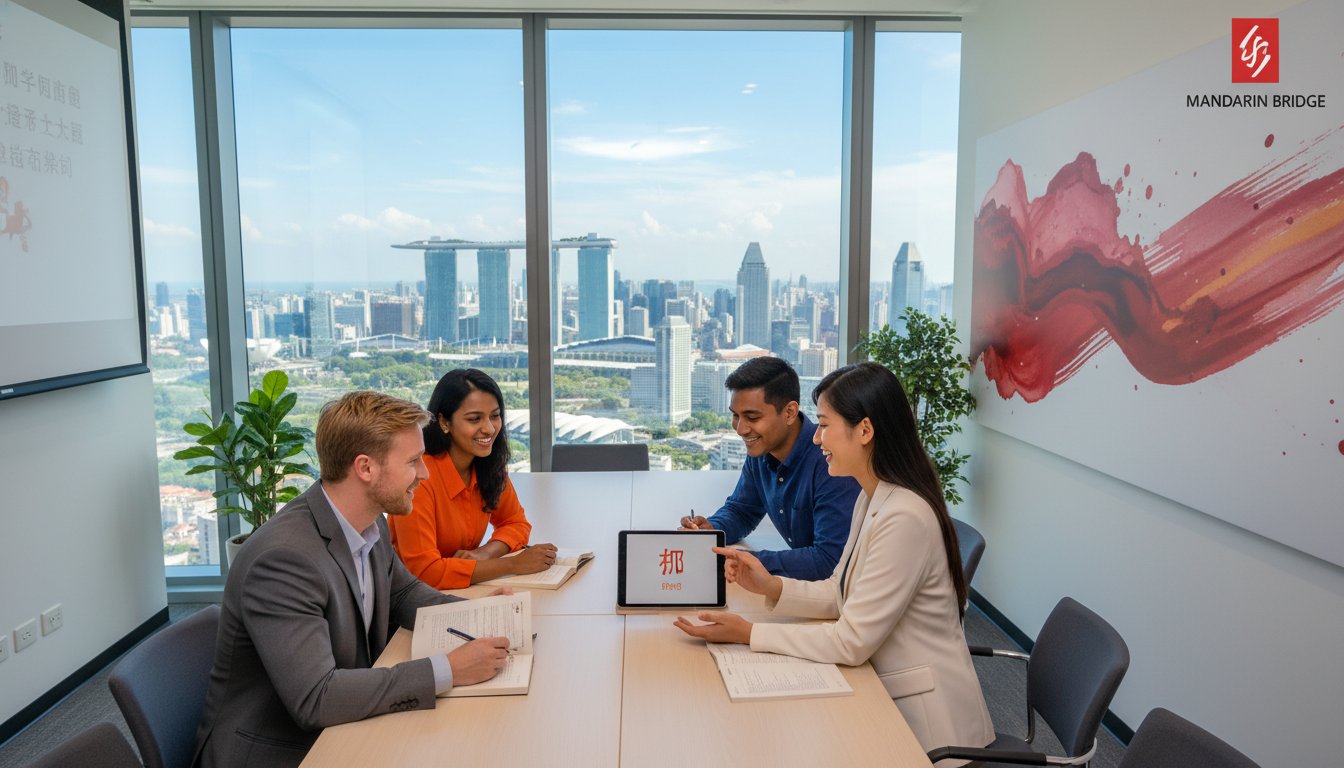
Did you know that 85% of multinational firms in Singapore’s downtown core identified Mandarin proficiency as a key competency for regional leadership roles as of January 2026? It’s common to feel a sense of isolation when colleagues switch languages during lunch or feel hesitant when navigating local environments like hawker centers. You might worry that learning mandarin for daily conversation in Singapore is too complex to balance with a full-time career.
This guide provides a clear roadmap to mastering practical language skills so you can navigate social and professional circles with ease. By focusing on real-world application, you’ll learn to communicate basic needs clearly and build better rapport with local colleagues. We’ll examine how a structured conversational chinese course can help you secure a 10 to 20% salary premium, all while training at our professional center at 10 Anson Road, level 22, International Plaza, Singapore 079903, located right above Tanjong Pagar MRT.
Key Takeaways
- Understand how mastering Mandarin acts as a cultural bond to eliminate the “outsider” feeling in local social and office environments.
- Discover why a “Speaking First” methodology is the most effective way to learn mandarin for daily conversation in Singapore for busy professionals.
- Identify the core pillars of a conversational chinese course that prioritizes high-frequency vocabulary over complex character recognition.
- Learn how to apply your linguistic skills to specific workplace scenarios, including professional introductions and industry-specific communication.
- Explore the convenience of premium training located at 10 Anson Road, level 22, International Plaza, right above Tanjong Pagar MRT.
Why Mastering Mandarin for Daily Conversation is Essential in Singapore
English serves as the functional bridge for business in the Lion City, but Mandarin often acts as the social bond that cements deep-rooted relationships. While you can survive with English alone, you might find yourself on the periphery of local office culture. Mastering mandarin for daily conversation in Singapore allows you to step inside those circles. It transforms you from a bystander into an active participant during those crucial informal moments that define a workplace. You aren’t just learning words; you’re gaining a passport to a more integrated life.
There’s a distinct psychological benefit to feeling truly integrated into your environment. When you understand the unique variety of Mandarin Chinese spoken in Singapore, the city starts to feel like home rather than just a temporary assignment. This linguistic effort signals respect for the local culture, which is a powerful tool for professional networking. People naturally prefer to do business and build rapport with those who take the time to understand their nuances. It’s about showing commitment to the community where you live and work.
Bridging the Social Gap with Local Colleagues
It’s a common scenario: the formal meeting ends, and as everyone heads to the pantry or lunch, the language shifts. Your colleagues aren’t trying to exclude you; they’re simply relaxing into their most comfortable tongue. If you learn chinese specifically for these informal settings, you can bridge that gap effortlessly. Small talk about weekend plans or local news helps you build a level of trust that formal emails can’t replicate. This rapport is essential for effective workplace chinese communication, turning professional acquaintances into trusted partners.
Enhancing Daily Life: From Hawker Centers to Taxis
Beyond the office, basic fluency makes life in Singapore significantly smoother. You’ll navigate daily errands with less friction and far more confidence. Practical benefits include:
- Ordering specific dishes at a crowded hawker center without relying on pointing or English menus.
- Giving precise directions to a taxi driver or discussing the best routes during peak hours.
- Exchanging pleasantries with neighbors or aunties and uncles in your heartland neighborhood.
Locals deeply appreciate it when professionals make the effort to speak their language. It breaks down barriers instantly and fosters a sense of mutual respect. If you’ve been looking for chinese classes near me to start this journey, our center is conveniently located at 10 Anson Road, level 22, International Plaza, Singapore 079903, right above Tanjong Pagar MRT. Starting with a practical conversational chinese course is the fastest way to feel like a true local in this vibrant city.
The Core Pillars of a Practical Conversational Chinese Course
Adult education requires a departure from traditional academic models. To effectively master mandarin for daily conversation in Singapore, you need a methodology that respects your time and professional objectives. While Singapore’s bilingual education policy has established a strong linguistic foundation across the city, adults often need a more targeted approach. A practical curriculum focuses on the language you actually hear in the boardroom and the hawker center.
The first pillar of an effective program is the prioritization of listening and speaking over complex character recognition. For a busy professional, the ability to respond to a colleague’s question is more urgent than the ability to write hundreds of characters by hand. By focusing on auditory cues, you build the confidence to participate in real-time interactions. This “Speaking First” philosophy ensures that you aren’t just memorizing theory; you’re building a functional tool for your career.
Interactive learning is the second pillar. Static textbooks can’t simulate the pressure of a live conversation. High-quality chinese classes near me use role-playing to recreate common scenarios. You might practice giving a project update or handling a polite introduction at a networking event. This active participation helps you internalize high-frequency vocabulary used in Singaporean daily life, making the transition from the classroom to the office seamless.
Mastering Pinyin and Tones for Clear Communication
Pinyin is the phonetic system that serves as the essential bridge for English-speaking adults. It allows you to read the sounds of Mandarin using the familiar Roman alphabet. However, Pinyin is only half the battle. You must also master the four main tones to ensure your meaning is clear. A slight shift in pitch can entirely change the definition of a word. Simple techniques, such as associating the rising tone with the cadence of a question, help beginners distinguish these sounds. Avoiding common tonal mistakes is a primary focus of any reputable mandarin course.
Essential Phrases for Immediate Use
Functional fluency begins with phrases that go beyond “Ni Hao.” To build genuine rapport, you need greetings and social cues that reflect local etiquette. In a professional setting, being able to ask for help or clarify information in Mandarin shows initiative. A conversational chinese course focuses on functional language that provides immediate utility in your daily routine. If you want to see how these skills can transform your workday, consider joining a mandarin class singapore at our center, conveniently located right above Tanjong Pagar MRT.

Academic vs. Conversational: Why Adult Learners Need a Different Approach
Adult learners face a unique set of challenges that traditional academic models simply don’t address. If you’re a busy professional, rote memorization of thousands of characters isn’t just difficult; it’s inefficient. You need to see a return on your time investment immediately. Most language schools treat adults like children, prioritizing exams and grammar theory over practical utility. Mastering mandarin for daily conversation in Singapore requires a shift in mindset from “learning a subject” to “acquiring a tool.”
The “Speaking First” philosophy addresses this by building confidence before diving into heavy linguistic theory. It’s about muscle memory. If you can’t say the words, knowing the grammar rules won’t help you in a live social setting. We focus on tailoring the curriculum to adult cognitive patterns. This means using logical structures and professional contexts that resonate with your daily life. You aren’t learning to pass a test; you’re learning to build a career and a social life.
Avoiding the “student” trap is vital for maintaining motivation. When you focus on communication rather than perfect scores, the pressure to be flawless disappears. This allows you to engage more naturally with colleagues and friends. Our goal is to move you beyond the classroom as quickly as possible so that the city itself becomes your practice ground.
Focusing on Listening and Speaking Over Rote Memorization
The science of adult language acquisition suggests that high-quality input is the most effective way to learn. Instead of staring at textbooks, you need to build an “ear” for the language. This happens through constant exposure to natural speech patterns. In the Singaporean environment, this is especially important because the rhythm of conversation can differ from formal textbooks. Our classrooms provide a supportive environment where the fear of making mistakes is replaced by a focus on clear communication. We prioritize being understood over being perfect.
Why ‘Starting from Scratch’ Doesn’t Mean Starting with Theory
One of the biggest misconceptions is that beginners must spend months on theory before they can speak. We believe in immediate application. If you learn a phrase in the morning, you should be able to use it that same evening. This practical focus is why we employ native instructors who model natural speech. They help you pick up the nuances that make you sound like a confident speaker rather than a student reading from a script. For more insights on this approach, check out these Speak Mandarin Fluently: Top Tips for Singapore Learners. This results-oriented method ensures that your progress is visible from day one.
Real-World Scenarios: Applying Your Skills in the Singaporean Workplace
The office environment in the Central Business District is a unique linguistic ecosystem. While English is the primary language for reports and emails, the real decisions often happen during informal interactions. Mastering mandarin for daily conversation in Singapore allows you to participate in these pivotal moments. You can follow a four-step framework to integrate these skills into your professional routine. This systematic approach ensures you aren’t just memorizing phrases, but applying them where they matter most.
Step 1 involves identifying the specific vocabulary used in your field. Whether you’re in fintech or logistics, the jargon matters. Step 2 focuses on the power of a professional introduction. A greeting delivered with the correct tone sets a standard of excellence. Step 3 takes you to the “makan” table. Lunch breaks are the heartbeat of Singaporean office culture, and using Mandarin here breaks the ice like nothing else. Finally, Step 4 uses your linguistic ability to build trust with regional partners. This effort signals that you value the relationship beyond the contract. In a landscape where 85% of multinational firms value Mandarin for leadership, mastering mandarin for daily conversation in Singapore is your competitive edge.
Workplace Chinese Communication and Building Rapport
Understanding the nuances of business chinese singapore is about more than just words. It’s about demonstrating respect for a colleague’s cultural heritage. By learning key terms for workplace chinese communication, you show that you’re a long-term player in the local market. This rapport building is essential for navigating complex projects and ensuring smooth collaboration across diverse teams. It transforms you from a foreign executive into a trusted local partner.
Navigating Social Etiquette in Professional Settings
You must understand the concept of “face” or “mianzi” to succeed in a Chinese-speaking business environment. It’s a delicate balance of respect, reputation, and social standing. Addressing seniors correctly, perhaps using their surname and title, is a simple way to show you’ve done your homework. Even dining etiquette, like knowing when to pour tea for others during a business lunch, can speak volumes about your professional maturity. These small gestures often carry more weight than the technical details of a proposal.
If you’re ready to elevate your career and build stronger professional bonds, consider enrolling in a conversational chinese course at our center. We are located at 10 Anson Road, level 22, International Plaza, Singapore 079903, right above Tanjong Pagar MRT for your convenience.
Start Your Journey: Premium Mandarin Classes Near Me at Tanjong Pagar
Consistency is the greatest hurdle for any adult learner. Choosing a mandarin course that fits seamlessly into your professional life is the most effective way to ensure long-term success. Our training center is strategically located at 10 Anson Road, level 22, International Plaza, Singapore 079903. Being situated right above Tanjong Pagar MRT means you can transition from your office to your lesson in minutes. This logistical advantage eliminates the friction of a long commute, allowing you to focus entirely on mastering mandarin for daily conversation in Singapore.
We provide an adult-centric environment designed for the modern professional. You won’t find the distractions of a general language school here. Instead, you’ll learn in a sophisticated setting that mirrors the corporate world you navigate daily. Whether you prefer the energy of an in-person mandarin class singapore or the flexibility of online mandarin classes singapore, our programs are built around your schedule. We offer various timings, including weekday evenings from 7:30pm to 9:00pm, to accommodate even the most demanding work commitments. By choosing a center in the heart of the CBD, mastering mandarin for daily conversation in Singapore becomes a manageable part of your routine.
Structured Learning at International Plaza
Our on-site chinese classes near me prioritize small group sizes. This structure is intentional. It maximizes your individual speaking time and ensures you receive immediate, corrective feedback from our expert instructors. Learning alongside like-minded professionals in the heart of the city creates a unique networking opportunity while you study. If you want to learn chinese effectively, a boutique school setting provides the personalized attention that large institutions often lack. You’ll find that the shared goals of your peers enhance your own motivation and progress.
Flexible Online Mandarin Classes for Busy Professionals
For those whose roles involve frequent travel or unpredictable hours, our digital solutions offer a robust alternative. These aren’t passive recordings. Our live online sessions use interactive tools that mirror the in-person classroom experience. You can maintain consistency in your learning regardless of your physical location. This flexibility ensures that your progress toward workplace fluency never stalls, even during your busiest quarters. We provide the same expert mentorship and structured curriculum online as we do in our physical classrooms, ensuring high-quality results for every student.
Elevate Your Professional and Social Presence in Singapore
Mastering mandarin for daily conversation in Singapore is a strategic investment in your personal and professional agility. You’ve seen how practical fluency can break the “outsider” barrier in the office and provide a competitive edge, especially since 85% of multinational firms now prioritize Mandarin for leadership roles. By moving away from academic rote memorization and focusing on real-world application, you can navigate the city’s social and business environments with genuine confidence.
Our native-speaking instructors bring extensive experience in teaching adults, ensuring every lesson remains relevant to your specific goals. We offer a curriculum designed for professionals and expats who need results they can use immediately. With our convenient CBD location at 10 Anson Road, level 22, International Plaza, right above Tanjong Pagar MRT, fitting classes into your schedule is seamless. Join our Adult Conversational Mandarin Course at Tanjong Pagar today! Take the first step toward building stronger bonds and unlocking new opportunities in the heart of this vibrant city.
Frequently Asked Questions
Is Mandarin for daily conversation hard for adults to learn?
Mandarin is not inherently difficult for adults when you use a structured, speaking-first methodology. While the tonal system requires initial focus, adults often benefit from logical frameworks and the immediate practical application of new phrases. By prioritizing Pinyin and verbal communication over complex character recognition, you can grasp the basics of mandarin for daily conversation in Singapore with confidence and speed.
How long does it take to become conversational in Mandarin?
Most students achieve basic conversational proficiency within three to six months of consistent study. This timeline varies based on your starting point and the frequency of your lessons. A typical mandarin course at our center involves weekly sessions that build upon each other logically. With regular practice in Singapore’s bilingual environment, you will likely start using basic phrases in real-world settings within the first few weeks.
Do I need to learn how to write Chinese characters for daily conversation?
You don’t need to master complex handwriting to communicate effectively in daily life. Our conversational chinese course prioritizes listening and speaking skills using Pinyin, the phonetic system for Mandarin. While recognizing high-frequency characters is helpful for reading menus or street signs, the primary goal is functional verbal communication. This allows you to build confidence without the heavy burden of traditional rote memorization.
What is the difference between a conversational and a business chinese course?
A conversational course focuses on daily social interactions, such as ordering food at a hawker center or making small talk with neighbors. In contrast, a business chinese course targets professional settings like formal meetings, negotiations, and corporate presentations. Both programs emphasize practical usage, but the vocabulary and social etiquette taught are tailored to different environments. Your choice should depend on your immediate personal or professional objectives.
Are there online mandarin classes available for busy professionals in Singapore?
Yes, we offer flexible online mandarin classes that mirror the interactive experience of our physical classrooms. These live sessions allow you to learn from any location, making them ideal for professionals with unpredictable schedules or travel commitments. You receive real-time feedback from native instructors, ensuring your pronunciation and tonal accuracy remain sharp regardless of your learning environment.
Where can I find mandarin classes near me in the CBD area?
You can find our premium mandarin class singapore at 10 Anson Road, level 22, International Plaza, Singapore 079903. Our center is located right above Tanjong Pagar MRT, providing maximum convenience for professionals working in the downtown core. This central location makes it easy to attend lessons before or after your workday without the stress of a long commute.
Can I start a mandarin course as a complete beginner?
Absolutely, many of our students start their journey with zero prior knowledge of the language. Our Beginner 1 modules are specifically designed to introduce the fundamentals of mandarin for daily conversation in Singapore. We guide you through the basics of Pinyin, the four tones, and essential greetings to ensure you have a solid foundation for future growth in a supportive environment.
How does learning Mandarin help with my career in Singapore?
Proficiency in Mandarin can lead to an estimated 10 to 20% salary premium for bilingual professionals in Singapore as of March 2026. It allows you to build better rapport with local colleagues and regional partners, which is essential for workplace chinese communication. As 85% of multinational firms in the CBD view Mandarin as a key competency for leadership, this skill significantly enhances your professional agility and networking capabilities.
Disclaimer
Disclaimer
The Chinese articles on this website are provided for general information and learning purposes only. While we strive for accuracy, we make no guarantees regarding completeness or reliability. The content does not constitute professional advice, and we are not liable for any loss arising from its use. External links or third-party content are for reference only. By using this website, you agree to this disclaimer.